Escort Cards vs. Place Cards: What’s the Difference?
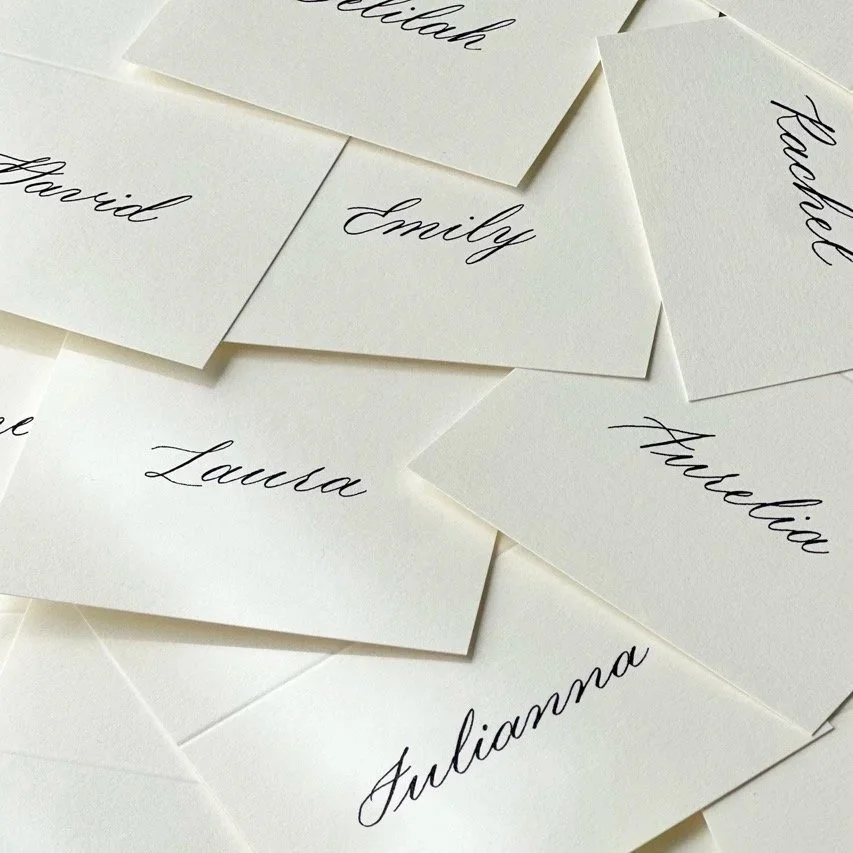
If you’re planning your wedding reception, you may have come across the terms place cards and escort cards—and wondered whether they’re actually the same thing. While they can look very similar, they serve two different purposes.
The simplest way to remember the difference is this: an escort card tells a guest which table to go to, while a place card tells them where to sit once they get there.
Depending on how you’re organizing your reception, you may need escort cards, place cards, both—or neither. Below, I’ll break down the difference and help you decide which option makes the most sense for your wedding.
What is an escort card?
An escort card tells a guest which table to sit at. Usually, escort cards are displayed just outside the reception or ballroom entrance, where guests can find them before making their way to their tables.
They can be tented or pre-folded cards that stand upright for easy reading, or they can be flat cards displayed on small stands or arranged as part of a larger escort card display. Each guest’s name is written on a card along with their assigned table number.
When guests arrive at the reception, they simply find their name, check their table number and take their card with them.
Escort cards are especially helpful if you want to assign guests to specific tables without assigning them to a particular seat. Once they arrive at their table, they can choose where they would like to sit.
What is a place card?
A place card tells a guest which specific seat at a table is theirs. Unlike escort cards, which guests find before entering the reception, place cards are already waiting for them at their assigned seats.
Place cards typically include the guest’s name and can be placed above the place setting, on the plate or incorporated into the tablescape.
Because the table itself is already established by where the card has been placed, a table number usually does not need to be written on a traditional place card.
Place cards are a great option when you want to create a fully assigned seating arrangement. They can also be helpful when your venue or caterer needs an easy way to identify individual guests and their meal selections.
How to choose between place cards or escort cards
One of the easiest questions to ask yourself is: Is it important that each guest sits in a specific seat at their table?
If yes, you’ll want place cards. If you only need to direct guests to the correct table and are happy to let them choose their own seats once they get there, escort cards may be all you need.
You can also use a seating chart instead of individual escort cards. A seating chart displayed near the entrance can direct guests to their assigned tables, while place cards at each table can then direct them to their individual seats.
For a smaller or more relaxed reception, you may decide you don’t need either. For a larger wedding, however, giving guests some direction can make finding their seats much easier and help the transition into dinner run more smoothly.
What wedding venues sometimes request
In order to serve your guests efficiently , sometimes wedding venues will require that for whichever card you choose that a meal indicator is added to a card. Some venues require the couple to add dots to indicate a meal, for example 1 dot for beef, and 2 for fish. This can be done quite easily by the calligrapher you hire and can blend in nicely to the style of your card. Another option is to use stickers, which you can also find plenty of options on Etsy.
I’d love to help you !
I offer custom calligraphy place cards and escort cards, handwritten for weddings and special events. Choose from a selection of card colors and styles to complement your wedding stationery and tablescape, with options for first names, full names, table numbers and meal indicators.
Based in the Washington, DC area, I work with couples and event professionals locally and ship nationwide.
Ready to get started? Order a sample to see my calligraphy in person, or get in touch to discuss your wedding.
